
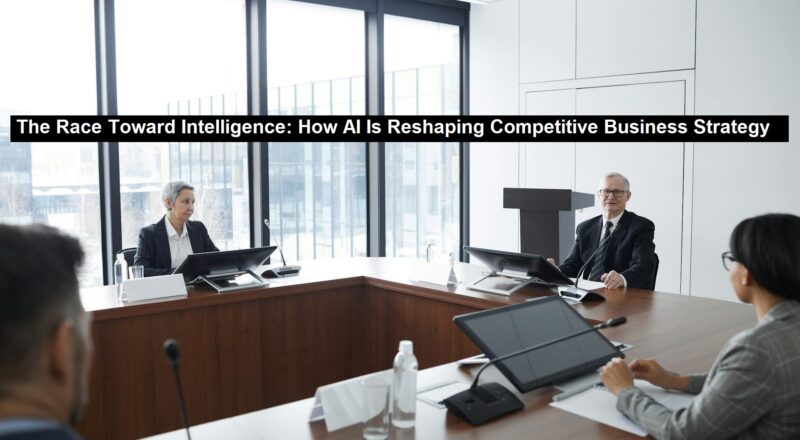
Artificial intelligence has shifted from an experimental concept to a defining force in modern business. What once lived in research labs is now embedded in daily operations across industries, powering faster decisions, smarter systems, and entirely new ways of working. AI is no longer just about efficiency. It is about adaptability, insight, and the ability to respond to change at scale.
This rapid integration has created an era of acceleration. Organizations are competing to adopt intelligent tools that improve performance, uncover hidden opportunities, and strengthen long term resilience. Those that move thoughtfully are gaining a measurable edge.
Healthcare Advances Driven by Data and Insight
Healthcare offers one of the clearest examples of AI’s real world impact. With enormous volumes of patient data and high stakes outcomes, intelligent systems are helping providers deliver care that is more proactive and precise.
AI-assisted imaging and predictive models allow clinicians to identify potential health risks earlier, often before symptoms become obvious. Treatment planning tools support more personalized care, helping reduce unnecessary procedures and improve recovery experiences. In surgical settings, AI guided technologies support greater accuracy and consistency.
A growing majority of hospitals now rely on AI for tasks such as scheduling, diagnostics, and administrative optimization. In today’s healthcare environment, intelligent systems are becoming foundational to delivering quality care at scale.
Retail Reinvented Through Anticipation
Retail has entered a new phase defined by personalization and prediction. AI enables retailers to understand customer behavior in real time, aligning products, pricing, and availability with shifting demand.
By analyzing browsing patterns, purchase history, and external factors, AI systems help retailers forecast needs and reduce inefficiencies across the supply chain. Inventory is balanced more accurately, promotions become more relevant, and customers experience interactions that feel tailored rather than transactional.
A significant share of retail leaders plan to expand their AI investments, reflecting a broader shift toward data driven commerce as a baseline expectation.
Financial Services Built on Speed and Accuracy
In financial services, precision and trust are critical. AI supports both by enhancing risk detection, decision making, and operational efficiency.
Machine learning models identify unusual transaction patterns almost instantly, helping reduce fraud and improve compliance. Predictive analytics assist advisors and institutions in evaluating market movements and refining investment strategies. These capabilities allow organizations to respond faster while managing complexity with greater confidence.
Adoption continues to rise as financial firms seek tools that can process large data sets quickly and translate insights into action.
Read: Overcoming Salesforce Testing Challenges with Test Automation
Education Adapting to Individual Learners
AI is also influencing how education is delivered and experienced. Learning platforms now adjust content based on student performance, helping learners progress at a pace that fits their needs. Automated assessment tools reduce administrative workload, allowing educators to focus more on guidance and engagement.
As adoption grows, AI is becoming a practical support system rather than a novelty, helping institutions meet diverse learning needs while improving efficiency.
Building a Strong Foundation for AI Adoption
Organizations that succeed with AI typically approach it with intention rather than urgency alone. Effective strategies often include:
- Investing in workforce education so employees understand and trust intelligent tools
- Launching small scale initiatives before expanding usage
- Establishing clear data governance and security standards
- Aligning AI projects with broader business objectives
- Partnering with technology providers that support scalability and reliability
Looking Ahead
AI adoption is not about following a trend. It is about designing systems that can learn, adapt, and support smarter decisions over time. Businesses that pair innovation with discipline are better positioned to navigate uncertainty and capture long term value.
Across healthcare, retail, finance, education, and beyond, the organizations shaping the future will be those that treat AI as a strategic capability, not just a technical upgrade. For more on this, check out the infographic below from data science training company, Ascendient Learning.