
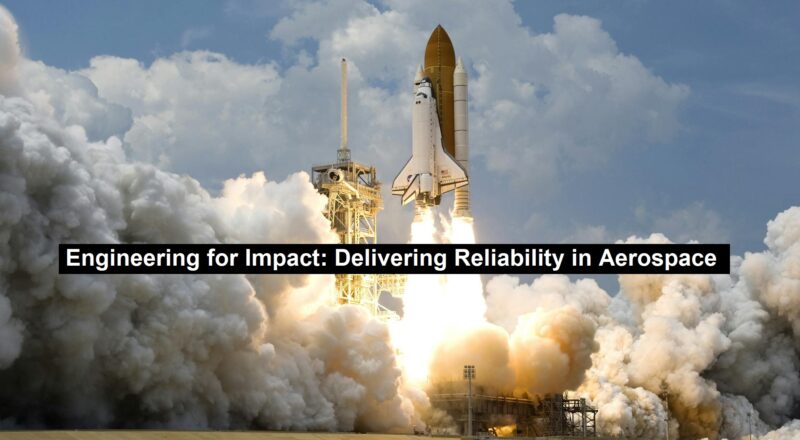
In aerospace and defense environments, performance is tested under the harshest possible conditions. Systems are exposed to intense heat, sudden shock loads, extreme pressure changes, corrosive elements, and persistent vibration. These stressors rarely occur one at a time. They overlap and compound, pushing materials and components to their limits. Designing for these applications means creating solutions that continue to function with accuracy and dependability despite constant strain.
Mission First Design Thinking
Effective engineering in high consequence environments starts with understanding mission impact. Whether supporting advanced aircraft, space platforms, or subsea defense systems, teams must evaluate what failure would mean operationally. That perspective guides decisions about structure, materials, and subsystem architecture from the very beginning.
Heat expansion, repeated acceleration, moisture exposure, and electromagnetic interference all influence performance. Engineers address these variables through advanced simulation, environmental testing, and tightly coordinated integration between components. Each subsystem must contribute to a cohesive whole. Seals must tolerate rapid temperature swings and pressure shifts. Electrical interfaces must maintain integrity through vibration and signal interference. Mechanical systems must respond consistently from storage conditions through peak operational stress.
Accounting for Long Term Stress
Extreme environments apply repeated cycles of strain that accumulate over time. Thermal shifts can weaken materials. Continuous vibration can loosen fasteners. Pressure fluctuations can strain structural boundaries. Engineering for aerospace and defense requires accounting for this cumulative fatigue and ensuring predictable performance throughout the system’s life span.
Durability alone is not enough. Systems must maintain repeatable output, precise control, and consistent response across missions. Reliability is measured by stability under pressure, not just resistance to failure.
Read: Why Tech Innovation Still Depends on Hands-On Engineering
Optimized Strength Under Constraints
Defense and aerospace platforms impose tight restrictions on weight, space, and energy use. Designs cannot rely on excess mass for reinforcement. Instead, engineers pursue highly optimized configurations that deliver resilience without unnecessary bulk. Materials are selected for strength and stability. Structural geometries are refined to manage vibration and maintain alignment. Each component is built with efficiency and survivability in mind.
Unlike commercial products adapted for harsh settings, aerospace and defense systems are purpose engineered to meet strict qualification standards. Validation processes replicate operational realities to confirm readiness before deployment.
Built for Readiness and Continuity
Operational availability is essential. Systems must integrate smoothly, require minimal intervention, and remain dependable across varied mission environments. Engineering decisions support not only immediate performance but long term sustainment and lifecycle stability.
In aerospace and defense, excellence is defined by precision at the limits. Through disciplined design, integrated testing, and forward focused planning, engineers deliver solutions capable of performing reliably under the most demanding conditions imaginable.
For a deeper look at how engineering enables operational resilience under extreme conditions, view the supporting infographic from Marotta Controls, a provider of marine control systems.